The Sustainability Benefits of Using Industrial Robots
- Share
- publisher
- RBTC team
- Issue Time
- Jan 13,2026
Summary
How automation contributes to greener manufacturing practices.
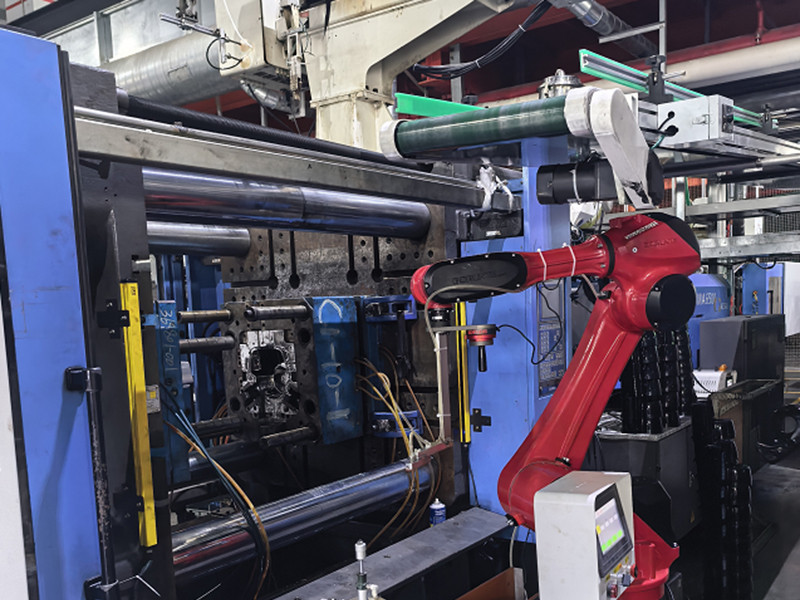
In real manufacturing operations, introducing industrial robots is rarely a simple technical upgrade.
Instead, it is a comprehensive decision that affects production stability, resource efficiency, and long-term operational resilience.
For manufacturing enterprises, the sustainable value of industrial robots is typically reflected in their overall performance after years of operation, rather than in short-term returns immediately after deployment.
1. What Manufacturers Truly Care About Is Not Just “Labor Reduction”
When industrial robots are discussed at the factory level, labor cost is often the easiest metric to quantify.
However, after robots are put into actual production, many manufacturing managers realize that the most significant change is not how many workers are replaced, but how much more stable and predictable the production system becomes.
In repetitive processes such as loading and unloading, welding, assembly, and material handling, industrial robots can maintain consistent motion accuracy and cycle times over long periods. This usually results in:
Less quality fluctuation caused by individual operating habits.
Easier execution and adjustment of production plans.
From a manufacturing perspective, this level of stability itself is a critical foundation for sustainable operations.
2. Improvements in Resource Utilization and Energy Control Emerge Over Time
When evaluating industrial robot projects, the benefits related to resource efficiency and energy consumption are often underestimated. However, in continuous production environments, these advantages gradually become evident.
Through high repeatability and standardized process parameters, industrial robots help factories:
Reduce unnecessary raw material consumption.
Lower rework and scrap rates.
Avoid energy fluctuations caused by inconsistent manual operations.
In manufacturing enterprises with long-term robot deployment, it is often observed that once production lines reach a stable operating phase, resource consumption per unit of output becomes easier to control.
This has practical implications for long-term cost management and for meeting carbon emission and compliance requirements. In manufacturing sites supported by RBTC (iroboticplus.com), such improvements are typically not isolated optimizations but cumulative results of increasing automation levels.
3. Safety and Workforce Structure Changes Are Inevitable Realities
In many industries, industrial robots are not a “nice-to-have” option, but a rational response to real operational constraints:
High-intensity or high-risk tasks are becoming increasingly difficult to sustain with manual labor.
Labor costs and compliance pressures continue to rise.
Safety incidents have a growing impact on production continuity.
When industrial robots take over hazardous, repetitive, or high-load processes, factory managers usually observe two clear changes:
On-site safety risks are significantly reduced.
Human roles gradually shift toward equipment management, process monitoring, and optimization.
This transformation is not aimed at short-term gains, but at building a more sustainable workforce structure.
4. Long-Term Value Depends on the Ability to Adapt to Change
Based on manufacturing experience, the success of an industrial robot project depends less on its initial configuration and more on whether the system can continuously adapt to change.
Industrial robot systems with good flexibility can respond to product updates and process adjustments through:
Program modifications.
End-effector replacement.
Process parameter optimization.
Without being forced into idle status after product changes.
This directly affects equipment lifecycle utilization and determines whether the investment remains sustainable over the long term.
5. The Natural Alignment Between Industrial Robots and ESG Goals
An increasing number of manufacturers are realizing that industrial robots are not introduced specifically to “meet ESG requirements,” yet in practice they naturally support ESG-related objectives:
Stable processes enable consistent management of energy consumption and emissions data.
Automated workflows make production traceability easier to implement.
Improved working environments help meet safety and social responsibility expectations.
From an operational standpoint, these outcomes are not additional burdens, but natural results of higher automation levels.
Conclusion: Industrial Robots as a Long-Term Capability Investment
For manufacturing enterprises, the sustainable development benefits of industrial robot applications are primarily reflected in long-term stability, controllability, and risk resilience, rather than in short-term metrics immediately after project implementation.
When industrial robots are treated as an integral part of the production system rather than a one-time equipment purchase, their value is gradually unlocked. This long-term perspective is also the fundamental reason why more and more factories continue to invest in industrial robot applications.